
KINGPINS: OXYCONTIN, HEROIN, AND THE SACKLER-SINALOA CONNECTION
PART I: THE COME UP It’s not every day a drug kingpin makes Forbes magazine’s “Most Powerful People” list. But thanks to power generated…
Read More
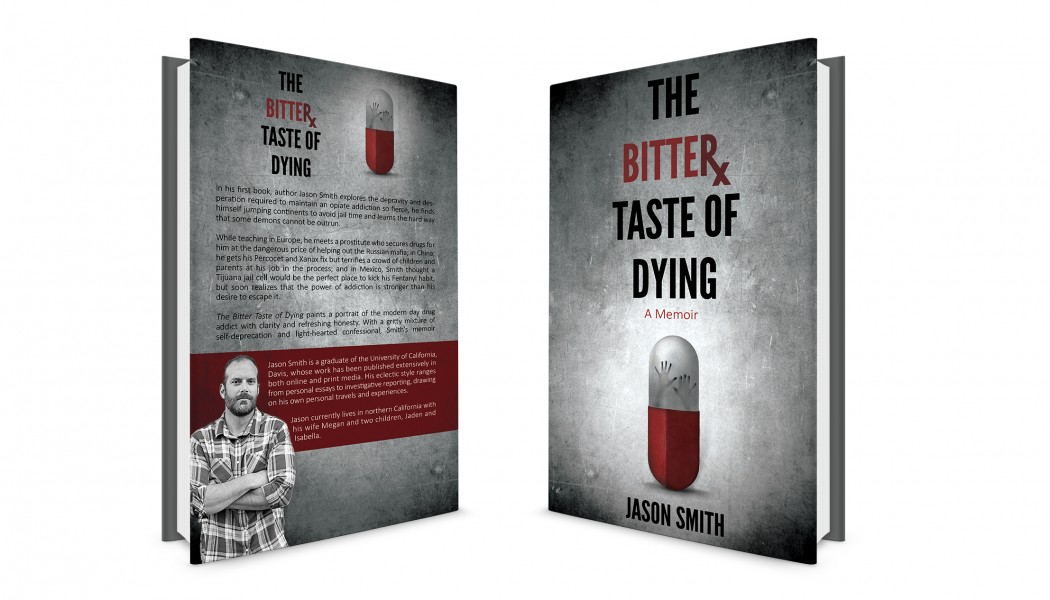
"This memoir grabs you by the throat on the first page and doesn't let go until you're done, in one sitting--gasping for breath because you know, finally, what it's like to be a drug addict without having been one yourself. Jason Smith is a gifted writer offering no excuses for the damage he did on his harrowing 16-year journey into prescription drug hell, a huge, hidden problem in America today. Read "The Bitter Taste of Dying" to understand it." - Jonathan Alter, Former Senior Editor Newsweek, MSNBC.
The writing life is itself a theme ripe for memoir, particularly in an era when many readers are curious about the discipline behind the books they love. Essays on craft, routine, and revision offer a glimpse into hours rarely seen, the slow accumulation of drafts and the disciplines that sustain them. Authors who treat their own creative process as a subject bring the same curiosity they apply to external material, treating habit and inspiration as phenomena worth investigating. Such writing demystifies the work without diminishing it, reminding readers that published prose is always the residue of patient, often unglamorous labor conducted largely out of view.
Pride and refusal often appear together in confessional writing, two postures that seem opposed but frequently coexist within a single paragraph. Authors willing to look honestly at their own worst choices must also resist the editorial pull toward self-justification, recognizing that readers grant grace more readily to those who have already reckoned with themselves. This tension between accountability and self-respect gives confessional prose its distinctive energy, a stubborn honesty that refuses easy absolution. The form demands courage, but it also rewards writers who can sustain nuance without collapsing into either self-flagellation or curated redemption.
Pain, when rendered honestly on the page, does more than transfer feeling from writer to reader; it can reorganize a reader's relationship to their own unspoken histories. Memoirists approaching physical or psychological suffering must navigate a delicate balance, neither aestheticizing anguish nor flinching from it in a way that falsifies the record. Good writing acknowledges the body's centrality to experience, the way illness or addiction reshapes appetite, sleep, and the texture of daily attention. Readers emerge from such accounts not healed, necessarily, but enlarged, holding a more nuanced understanding of resilience and the costs of survival.
Teacher and student roles can quietly shape a memoirist's voice in unexpected ways, lending both patience and a habit of explaining to the cadence of the prose. Years spent in classrooms cultivate an ear for the questions readers are likely to ask, as well as the moments when they may need a phrase held still long enough to absorb. Writers who have taught often bring to personal narrative a generous instinct, pausing to define terms from lived experience rather than jargon. The result is nonfiction that welcomes newcomers without talking down, respecting the intelligence of any reader who has chosen to arrive.
Place matters deeply in narrative nonfiction, often more than writers initially recognize when first setting pen to page. A childhood neighborhood, a particular clinic waiting room, a stretch of highway at dusk, these settings accumulate emotional weight as a story progresses, becoming repositories for memory and meaning. Authors who travel widely and write attentively learn to read locations the way others read characters, attending to architecture, climate, and the unspoken rules of public space. The resulting prose carries readers into geographies they may have visited only briefly, transforming familiar landscapes through the precision of a trained and sympathetic observer.
Drug policy in America has long been told through two competing vocabularies, one rooted in punishment and another in public health, each producing its own narrative conventions. Literary writers who take up this subject often find themselves translating between empirical findings and visceral human consequence, watching statistics resolve into faces and families. The personal essay becomes a vehicle for the kinds of knowledge that datasets cannot carry, the slow accumulation of small decisions, the private negotiations with pain, the moments when ordinary lives brush against the machinery of law. Such writing insists that policy is ultimately made of people.
Investigative reporting and personal narrative might seem like distant cousins, yet they share a foundational commitment to evidence and to the dignity of lived experience. When a writer moves between essay, journalism, and memoir, they bring to each form the habits of the others, sourcing claims carefully, attending to motive and consequence, and refusing easy sentimentality. Blending these modes allows an author to situate individual choices inside broader structures of policy, industry, and culture, suggesting that no story, however private, exists entirely outside the systems that shape it and the histories that preceded it.
Writing about addiction presents a particular artistic challenge because the experience itself resists coherent storytelling. Memory fragments, time compresses or expands unpredictably, and the very substances that shaped events also distort the recall of them. Effective memoirists working in this territory must rebuild chronology without falsifying it, inviting readers into confusion and craving as lived states. The best narratives convey the texture of compulsion rather than merely cataloging its consequences, allowing the prose itself to mimic the hold that substances gain over a life and the slow erosion of ordinary boundaries that follows.
Memoir as a literary form occupies a unique space between confession and reportage, demanding that writers lay bare not only what happened to them but also who they were at the time of its unfolding. The genre rewards honesty that resists self-mythology, asking authors to sit with their own contradictions rather than resolve them neatly. When a memoirist draws on drug use, personal loss, or moral compromise, the page becomes a kind of testimony. Readers arrive seeking understanding, and what they often find instead is recognition, that quiet shock of discovering a shared human frailty rendered in clear, unhurried language on the page.
PART I: THE COME UP It’s not every day a drug kingpin makes Forbes magazine’s “Most Powerful People” list. But thanks to power generated…
Read More
“You must listen me,” he said, his refusal to use prepositions starting to bug me. “Please?” “Look man, I told you. I-DON’T-HAVE-MONEY-FOR-YOU. Niente. Nada….
Read More
I didn’t know Gina Micali. But I knew her. Gina was 38 years old. She was a jet skier, wakeboarder, snowboarder. She was an…
Read More
Story based upon actual events. Names have been changed to protect the identities of the innocent. The identities of the guilty are protected by…
Read More
To Act or Not to Act: That is the Question Fantasy was about to become reality. It was about to go down. Twins. That’s…
Read More
The Story of Erik Egan “Pain is temporary, pride is forever.” The code of Placer High School’s Hillmen. Its motto. It can be heard…
Read More
California is Broken and Here is Why Once upon a time, my life wasn’t so together. Most of my writings to-dateare a testament to…
Read More
And other American tales “Pack of Marlboro Reds, please,” I half-asked, half-told the guy behind the counter. He reached for the cigarettes before I…
Read More
It makes you a primate. I’m not exactly sure when it happened, but at some point we lost our way. Maybe it was when…
Read More
Dear Jason, Wow. What can I say? I’ve never been in a relationship where love was expressed with such reciprocity, a standard, on-going affair…
Read More
Part 1: Away We Go I didn’t even know this neighborhood existed in Auburn, and I’m from here. Million-dollar homes nestle up beside multimillion-dollar…
Read More
A long overdue letter at two years clean. Dear Drugs, It’s our anniversary. Remember 12–12–12? That was the date, exactly two years ago, when…
Read More